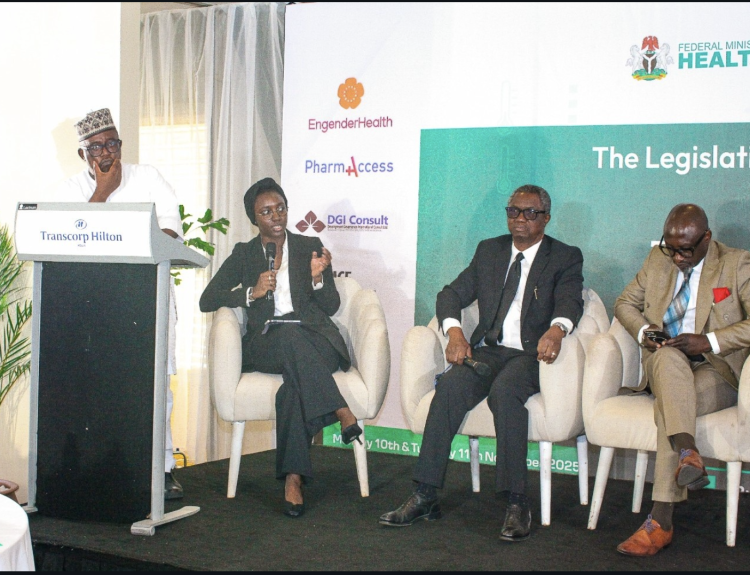
This week, I was invited to deliver an expert talk and workshop for Youth groups in Ethiopia for their technology-facilitated gender-based violence (TFGBV) project. The session brought together 10 practitioners working in digital safety, policy, and community support.
My talk focused on the intersection of low literacy, reporting systems, and inclusion barriers.
What began as a discussion on programming trust and inclusion into the a co-developed toolkit with Ethiopian stakeholders quickly became a shared recognition of how broken current reporting systems really are.
Meet Liya
Rather than present abstract statistics, I shared Liya; a persona based on research insights from low-literacy users.

Liya is confident using TikTok and WhatsApp for business and family, preferring these platforms because they’re built for visual engagement: videos, voice notes, and storytelling, that don’t rely heavily on reading.
When abuse appears like cruel comments in slang and intentional misspellings, she blames herself and doesn’t attempt reporting.
The Structural Imbalance
This is where the paradox becomes clear:
Template abuse takes minimal literacy; reporting it demands high literacy and digital confidence.
Abusers can copy-paste template harassment with little effort. People like Liya, by contrast, face:
- Multi-step navigation
- Abstract policy categories (e.g. harassment vs bullying)
- Dense, text-heavy reporting forms
The reporting experience is designed for tech-savvy, high-literacy users; the very people least likely to face these barriers.
Session Slides
Walking in Liya’s Shoes
To test these barriers, I asked participants to choose a platform and try reporting harmful content by imagining where Liya would get stuck, what skills she doesn’t have, and what would be impossible to explain to her.
What happened next validated my research and more.
What Practitioners Discovered
The interactive exercise revealed the same barriers users like Liya face:
Facebook Reels
“Language restrictions, terms are complex with lots of titles and definitions. Multiple steps are hard to explain… very broad categories but also limiting regarding gender.”
TikTok
“Report section is hard to find, hidden under the ‘share’ icon… confused by the labels and hard English vocab… Liya wouldn’t want to be wrong when reporting, so she might not end up reporting… Ethiopian languages not well represented… lots of icons: we take this for granted, but the buttons have symbols which are a language themselves.”
“You have to hold down the message for a long time for the option to pop up. This can be hard to explain! I’ve watched my granny struggle with knowing how long to hold it down for.”
One participant noted:
“Some apps have no report systems. It is difficult to report on YouTube. Also it has no distinct section for report bar.”
From Solutions to Systemic Change
What fascinated me was watching solutions evolve in real time.
They started with individual actions:
“Women should start by doing a quick digital safety check: review privacy settings, turn off location sharing, limit who can interact with them, use strong passwords with two-factor authentication.”
But quickly shifted to structural demands:
“We should suggest/demand that apps are translated into the languages of all countries they operate in.”
“The steps are quite long to report someone… all platforms should review each and every report and make users feel their report counts.”
“We may need something as strong as a revolution! Women boycotting platforms that are not safe for women.”
Validation of Design Principles
The “revolution” comment wasn’t hyperbole, it was recognition. These practitioners, experts in their fields, had just experienced what Liya faces every day.
The shift from individual fixes to systemic change mirrored exactly what my research suggested: this isn’t only a user education problem, it’s a design justice problem.
Their struggles validated our trauma-informed design principles:
- Transparency: clear feedback, no mysterious processes
- Choice: multiple pathways to action
- Safety: no shaming language
- Collaboration: designing with excluded communities, not for them with constant feedback loops
The Bigger Picture
This session reinforced something critical about inclusive design research: we can’t just study excluded users and design for them. We need to create experiences that help privileged users understand exclusion viscerally.
When experts struggle with reporting systems, they begin to grasp what those systems do to vulnerable users.
The session also highlighted the ecosystem nature of the problem:
- This isn’t just about better User Interfaces/User experience (UI/UX)
- It’s about platform accountability, policy frameworks, community support systems, and yes, sometimes revolution
As one participant noted:

Reflection
The work continues. But now I know that when we put research into practice, when we ask people to walk in excluded users’ shoes, the call for systemic change becomes inevitable.