
In a paper published last year based on my PhD research, I explored critical inconsistencies in how researchers define and measure literacy in Human-Computer Interaction (HCI) research. Our systematic literature review of 33 HCI studies revealed significant conceptual gaps in understanding functional illiteracy.
Key findings showed that 41% of studies lacked a clear definition of literacy, while 74% did not specify measurement techniques. This ambiguity complicates efforts to design inclusive technological solutions for users with limited literacy skills. By addressing these conceptual challenges, we aimed to support more effective technology design for marginalized user groups in developing regions.
Our work proposed the following as a working definition for functional illiteracy:
Mohammed et al (2023)
‘Functional illiterates are motivated adults with some familiarity with text but insufficient to fully comprehend meanings and low skills in the measured digital skill, with enough language proficiency in the study language if they are literate in their native language.’
The paper, which was published at the AfriCHI Conference (ACM) in South Africa and won the Best Poster Award, also sparked unexpected conversations. Experts in the field questioned whether the term ‘functional illiteracy’ could be perceived as derogatory. These discussions stirred deeper reflections on the role of ‘naming’ in research and how mental models of ‘framing’ shape interpretation.
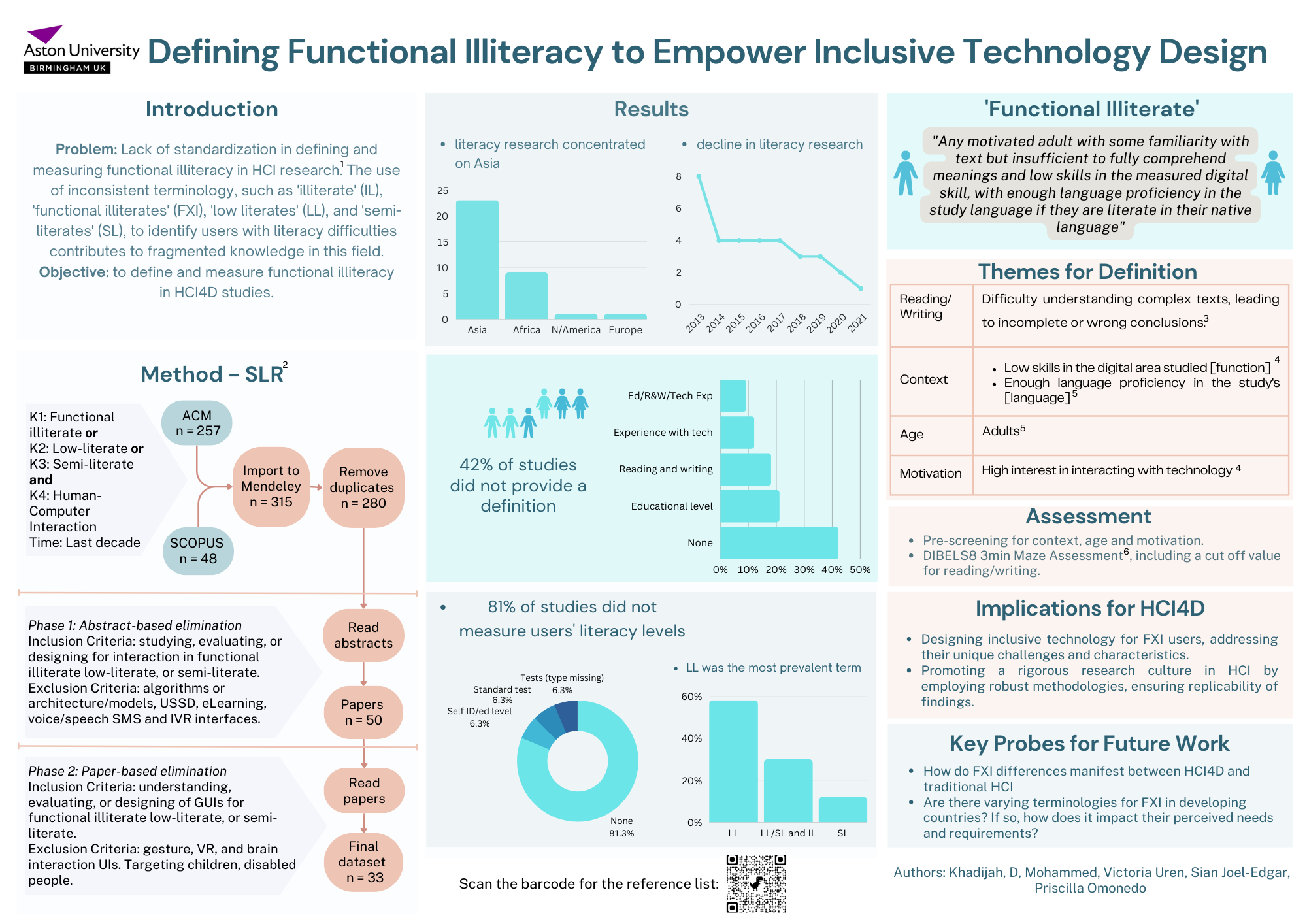
Conference Poster and Award
For context, here’s the poster I presented at the conference, which received the Best Poster Award
This has evolved into a current effort exploring the balance between ‘calling a spade a spade’ (being direct and unambiguous) and ‘sugarcoating’ (softening language) to avoid potential offense.
It’s an interesting phenomenon: we often assign labels that society has conditioned us to perceive negatively. For example, we might call someone an ‘ass‘ because we’ve been taught that being an ‘ass‘ is inherently bad. But what if that isn’t true? What if my interpretation of an ‘ass‘ differs from yours or from theirs? Depending on perspective, anyone could be labelled an ‘ass‘, sometimes simply for being different, unconventional, or unwilling to conform. In that case, is being an ‘ass‘ truly bad, or just a label for what we don’t understand or value?
This balance between naming things as they are and considering the weight of labels in shaping perception has led to one of my current projects that I am very excited about!

This recognition is more than just a milestone—it’s fueled deeper reflection on the importance of ‘naming’ in research. How do we frame realities in ways that foster clarity, respect, and inclusivity? Ultimately, how does the language we choose shape the solutions we build? I will continue to share updates on this evolving work as it progresses.
This study was published as part of ACM’s CHI proceedings. You can read the full paper here: https://dl.acm.org/doi/proceedings/10.1145/3628096


This piece is a perfect blend of intellect and heart. The ideas you present are complex, but you navigate them with such ease that it feels like you’re inviting the reader to walk alongside you, step by step, through a maze of thought and emotion. It’s the kind of writing that challenges you and comforts you all at once.