How often do we get to reflect on our journey and share it to inspire others? In mid-2023, I had two such opportunities, which allowed me to reflect on my academic path, share my experiences, and connect with students standing where I once stood.
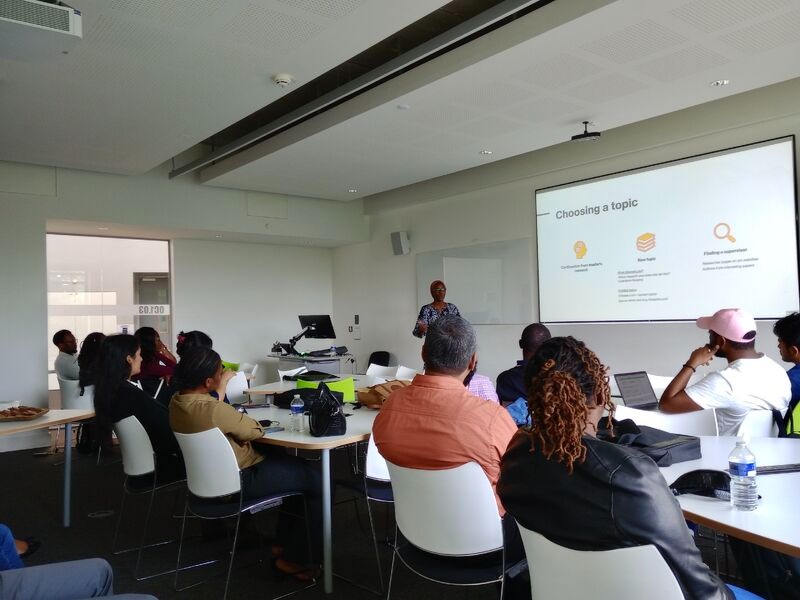
The first opportunity came in June 2023, when I was invited by the Midlands Regional Network Coordinator for the Commonwealth Scholarships Commission to present on “How to Write a PhD Proposal.” This presentation took place at the Spring Academic Conference at the University of Warwick, which is renowned for its beautiful campus. A month later, in July, I was back at Aston Business School, this time as an alum of the MSc ISBA program, speaking to current students about transitioning from MSc to PhD. Both moments, though distinct, offered a chance to reflect on my journey from MSc to doctoral research and the lessons I’ve gathered along the way.
Looking Back ….
At the time of these presentations, I was beginning my third year, a phase in which data analysis and writing the thesis submission dominated my life. Reflecting on these invitations, I was drawn back to my early years: the curiosity and excitement of starting a PhD, the challenges of finding that sweet spot to settle in as a research focus, and the personal growth that came with it all.
In the first presentation, I focused on breaking down the daunting task of writing a PhD proposal. At the time, I thought, what is the key takeaway I want my audience to have? The answer was simple: anyone could find out how to write a PhD proposal from multiple resources online, but what else do they need to know that is more practical in choosing a PhD topic and writing the proposal? Although I shared practical advice, like identifying research gaps, I emphasised the importance of persistence and aligning research interests with personal strengths. One point resonated particularly with me and the audience: the need for self-awareness.
With a computer science background, I excelled in programming but had no passion for it. This insight helped me choose a research path that excited me rather than one that felt ‘natural’ to follow. At the same time, I talked about how I did not continue with my master’s research but rather ventured into an entirely new topic with elements I had to learn – like studying literacy and cognitive aspects of people. This decision was based on self-introspection – I thought a PhD is 3 years thereabouts; I know myself to get bored pretty quickly and need to step out of my comfort zone intellectually. As such, the decision to combine aspects I was already skilled at (Interaction Design, Human-Computer Interaction, User Experience) with unfamiliar aspects (Cognitive Processes and Literacy Acquisition) built on my self-awareness.
The second presentation was a more personal reflection, reconnecting with MSc Information Systems & Business Analysis students at Aston Business School. It felt nostalgic to stand before the same program that had shaped my research skills and opened the door to my PhD journey. Here, I spoke about the transition from MSc to PhD, highlighting how my master’s experience—research projects, connections with faculty, and even publishing my thesis—prepared me for the rigours of doctoral study. Here, I think the key point was in connecting in terms of letting students know that I share the sentiment of feeling like ‘what next’ could be daunting and highlighting that while it may seem like a PhD might feel like a cop-out of being in that position, it is very okay to take a break, gain other experiences to think things over and then come back to it if it is what you want.
Attachments and Resources
For those interested in the content of my presentations, I’ve included them here as resources:
Feel free to download and explore them if you’re preparing for a PhD or simply curious about the process.
Lessons from Sharing My Journey
Both presentations taught me invaluable lessons, not just about mentoring but about my growth.
From the first presentation, I realised how much clarity I had gained over the years about myself and how that relates to the research process. It reinforced the value of self-awareness – not just for choosing a research topic but for navigating the entire PhD journey. Knowing your strengths and limitations isn’t just helpful; it’s essential for maintaining resilience. The point of self-awareness strongly related to the audience. In fact, a fellow PhD who had presented his research there came to me during the break sessions and said
“I enjoyed your presentation; those were things I wish I’d known before starting a PhD”.
The second presentation reminded me of the importance of community. Returning to my MSc program, sharing my experiences, and answering students’ questions about the PhD journey highlighted our interconnected paths. Sharing my story felt like giving back to a community that had once supported me. It also reminded me of a quality I possess that I often forget, as one of the audience members commented
“I always fear that a PhD is too tough, but hearing you speak about your experiences, you seem so calm, and I feel inspired”.
Moving Forward: A Message for Students Anyone
Reflecting on these moments has reminded me that our journeys are not just for ourselves; they’re opportunities to inspire and uplift others. Our stories, regardless of how we share them, have the potential to guide others in navigating their paths.
Ultimately, whether one is a student, an aspiring researcher, or a curious learner reading this, trust in your unique journey and the impact it can have.