
In July 2023, Nigeria took a step towards digital empowerment with the unveiling of its National Digital Literacy Framework (NDLF). Led by the National Information Technology Development Agency (NITDA), this initiative marks a significant milestone in the nation’s digital journey. The NDLF’s ambitious goal is to contribute to achieving 95% digital literacy among Nigerians by 2030, aligning with the United Nations’ Sustainable Development Goal (SDG) thematic Indicator 4.4.2.
As a PhD candidate focusing on inclusive user interface design in the Nigerian landscape, I have been observing the rollout and implications of the NDLF. While this framework undoubtedly represents a commendable surge forward, my research has led me to identify limitations that demand our attention and further refinement.
In this post, I will share some of my thoughts on the NDLF, exploring its strengths, shortcomings, and proposing ways we can enhance its effectiveness for Nigeria’s diverse population. Join me as we explore digital literacy in the Nigerian context and envision a more inclusive digital future.
Key Takeaways
- The National Digital Literacy Framework (NDLF) is a significant step towards digital literacy in Nigeria but faces critical limitations.
- User interface design plays a crucial role in digital literacy, challenging traditional assumptions.
- The NDLF needs to consider diverse user groups, especially those with limited literacy.
- A more nuanced, context-specific approach to digital literacy is necessary for Nigeria’s diverse population.
The Digital Literacy Landscape in Nigeria
While specific statistics are hard to come by, it is clear that Nigeria faces significant challenges in digital literacy. The rapid adoption of mobile technology has not necessarily translated into comprehensive digital skills. Many Nigerians, especially in rural areas and among those with limited formal education, struggle with complex digital tasks despite being comfortable with basic phone functions like phone calls. This underlines the importance of initiatives like the NDLF in addressing the diverse needs across the population.
Before looking at the NDLF, it is essential to understand the historical context. The NDLF falls into in the National Digital Economy Policy and Strategy (NDEPS) 2030 plan, which focuses on enhancing infrastructure and imparting digital literacy. The plan explicitly addresses areas like financial inclusion, eGovernment, individuals with disabilities, and marginalized digital populations. Despite the presence of this plan, Nigeria has made limited headway in achieving its digital literacy goals. Notably, in 2018, the WEF identified that Nigeria lags its regional counterparts in terms of digital literacy skills. While some strides have been made in infrastructure 2 development, critical contributors to the digital divide, such as affordability issues, low user proficiency, and a lack of motivation, remain inadequately addressed.
Establishing Context
Returning to the NDLF, its development drew inspiration from the European Union’s Digital Literacy Global Framework (DLGF) and the Mobile Information Literacy (MIL) framework. This choice was well-founded, especially considering Nigeria’s absence of a comprehensive digital literacy framework prior to this. My focus here centres on the DLGF as it includes digital competencies, while the MIL framework addresses proficiency levels (an avenue for exploration on another occasion).
The DLGF’s strengths lie in its origin within the UNESCO Institute of Statistics and alignment with the DigComp2.0 framework, recognized globally as comprehensive and effective. This adaptation aimed to acknowledge the digital literacy needs of diverse nations considering the significance of contextual disparities among countries. While the NDLF’s reliance on the DLGF is praiseworthy, it neglects elements essential for digital literacy in Nigeria. These omissions transcend the NDLF’s assertion that “attaining a holistic perspective of digital literacy requires minimal adaptation from the DLGF.” SO, what are some of these neglected elements?
The Challenge of Limited Functions
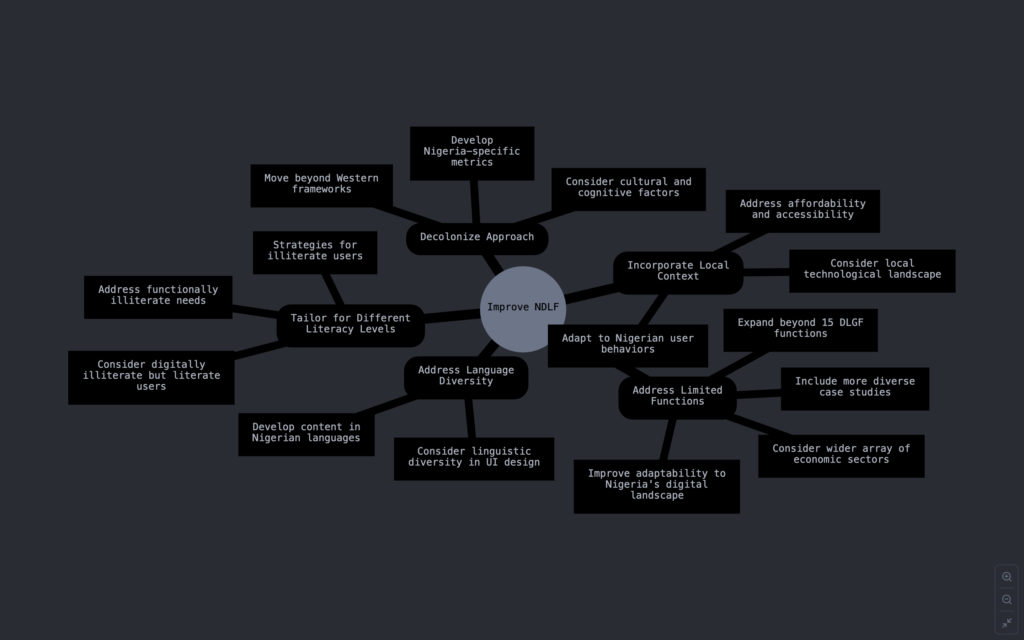
The primary shortcoming of the NDLF becomes apparent in its restricted scope and reliance on a predefined set of functions derived from the DLGF’s case studies. One limitation of the NDLF is its reliance on the fifteen functions identified in the DLGF, tailored for smartphones. However, these functions originated from 20 case studies limited to only six sectors during the DLGF’s 2018 development. The DLGF itself recognizes the potential for discovering additional functions beyond the initial list through more case examples or the inclusion of a wider range of economic sectors. The NDLF’s decision to confine itself to the constraints of the DLGF’s functions raises concerns regarding its adaptability and relevance within Nigeria’s ever-evolving digital landscape.
The Three Faces of Literacy
Expanding on the context-aware gaps in the NDLF, we must consider literacy complexities because proficiency in reading and writing is crucial for developing cognitive functions that are essential for technology engagement. In regions like Nigeria, where limited literacy is prevalent, this poses a significant concern. Literacy can be broadly classified into three groups: First, there’s the group who have never had the chance to learn reading or writing. For them, text-based apps might as well be in a foreign language. Then we have those who can read and write but have challenges with anything more complex than basic texts. Finally, there is a group that cuts across both – those who find digital technologies challenging, regardless of their reading ability. Understanding these distinctions is crucial because each group requires a different approach in digital literacy initiatives. The NDLF’s current strategy may not adequately address the needs of all these groups, particularly those with limited or no literacy skills.
Real-World Impact: Stories from the Field
During my research, I encountered numerous situations that highlight the real-world challenges of digital literacy in Nigeria. One particularly telling example came from a participant stressed by a mobile banking application. They expressed their frustration, saying:
“Transferring money was very hard. I thought it would be like [USSD] -like the application will be asking me questions.”
This comment is just an example to show the gap between user expectations shaped by familiar technologies (like USSD) and the reality of more complex digital interfaces. It shows how users with limited digital literacy often try to adapt to new digital tools, even when they are designed to make financial transactions more accessible. To find out more about my evaluation of digital skills in Nigerian users, you can look at one of my works here: https://doi.org/10.1145/3628096.3629043 .
Addressing Literacy Challenges:
Understanding these literacy categories is vital because each requires a tailored approach to technology policies and use cases. The NDLF’s current strategy revolves around training and assessing digital skills impact. However, considering these literacy categories, this approach may hinder those who do not have reading and writing skills. Those with limited literacy may face challenges in transferring knowledge across different digital applications due to constrained reading and writing abilities. For example, even if those with limited reading/writing skills receive training in a specific mobile banking app, applying this knowledge to different apps becomes challenging because such training often nurtures rote memorization, making it hard to transfer skills across diverse contexts. True digital empowerment should transcend rote skill acquisition and prioritize “mastering ideas, not keystrokes,” especially as software continually evolves.
On the other hand, those with higher literacy skills are likely better at transferring knowledge across contexts, making training more beneficial for them. However, the NDLF’s current approach does not distinguish between these literacy categories, missing an opportunity to address each group’s specific needs effectively. Therefore, we must consider how to include those all levels of literacy, within the NDLF, given its current disregard for reading and writing skills.
The Complexity of Language
Highlighting another contextually significant aspect, the NDLF overlooks linguistic diversity as a significant challenge in digital literacy. Nigeria, with over 500 languages, represents a linguistically diverse nation. While English is the official language, many Nigerians can read and write in local languages but not English. The dominance of English-centric applications complicates digital literacy in this multilingual country. By neglecting these language considerations, the NDLF misses an opportunity to address the needs of a significant portion of Nigerian users, including those who are literate in their native languages but not in English.
Towards Decolonization
Addressing these limitations calls for a decolonized approach to digital literacy in Nigeria. Demonstrating the need for an improved framework for Nigeria, let’s turn to the example of Nigeria’s cashless policy introduced in 2022. This serves as an example of the shortcomings of digital literacy in Nigeria. While some challenges related to infrastructure, lack of access and network problems arose, our focus lies on a different aspect. Specifically, we reference the significant number of Nigerians who possessed digital devices but did not have the requisite digital literacy skills to use them effectively.
This example illustrates the need to align digital literacy efforts with the distinct requirements of Nigeria. The current approach, merely replicating Western frameworks and proposing training-based policies in schools, overlooks individuals who may have access to training but struggle to adapt it to diverse contexts. It disregards those who are literate in their native language but not in English, rendering them unable to utilize financial channels effectively. Furthermore, it fails to account for those who may lack access to training altogether, since these trainings are primarily targeted at schools and teachers.
Conclusion
Nigeria’s National Digital Literacy Framework represents a commendable stride towards digital inclusion. However, the current approach overlooks key segments of the population, including diverse languages and adults with varying literacy levels, all of whom play a pivotal role in achieving comprehensive digital literacy. Hence, it is imperative for the NDLF’s stakeholders to re-evaluate the strategy, broaden its scope to cater to a more diverse demographic, tailor interventions and embrace a context-sensitive approach to cater to the specific needs of distinct literacy categories and linguistic backgrounds. We require a practical approach, one that recognizes the need to adapt frameworks and policies to the unique skills and circumstances of Nigerians. This practicality extends beyond financial channels and encompasses our broader digital landscape. Whether we consider policies that steer the design and development of services to align with the existing skills of our citizens or explore alternative strategies, proactive action is imperative. By taking these critical steps, Nigeria can forge a more inclusive and effective path towards achieving its digital literacy goals, ensuring that the vision of a digitally literate Nigeria becomes a reality. In the next posts, we will consider some of these alternative solutions. Your experiences and thoughts on digital literacy in Nigeria are valuable. Have you encountered challenges with digital services? Or perhaps you’ve been involved in digital literacy initiatives? Share your stories and insights in the comments below. Your contributions can help shape the conversation around digital literacy in Nigeria and inform future improvements to frameworks like the NDLF
